

Agile ways of working is a new way of approaching work, characterized by its flexibility, iterative nature, and focus on feedback. Today, agile working is being adopted by more and more businesses as a way to improve efficiency, communication, and collaboration.
If you've been hearing about agile ways of working but aren't quite sure what it is or why it's relevant for your company, we'll clear any confusion in this post. We'll also explore the benefits of agile working and what you can expect from a successful implementation. Read on!
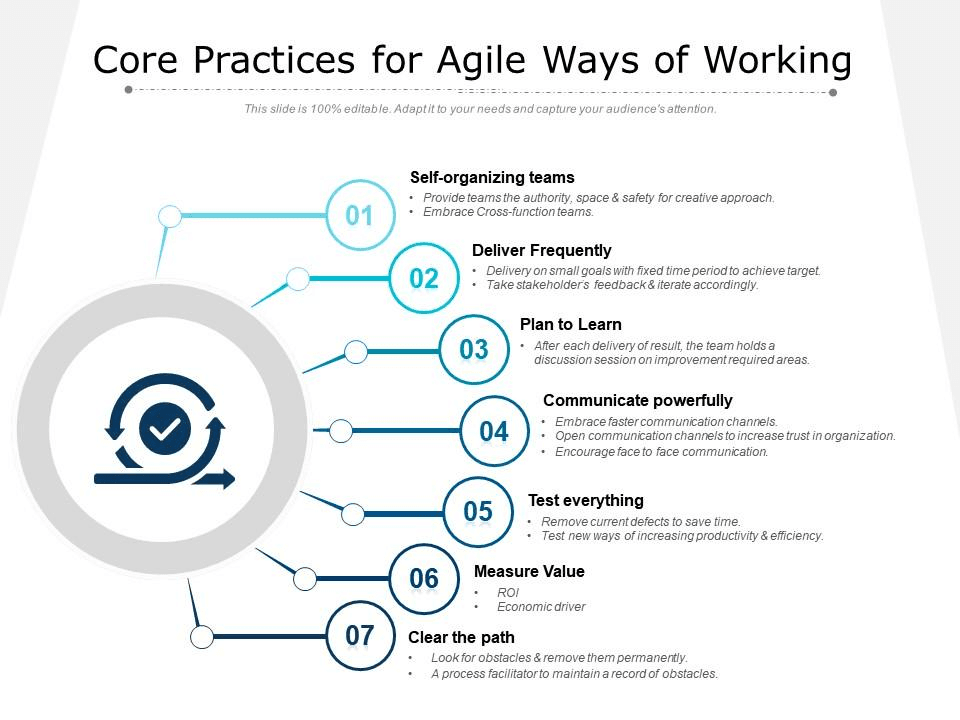
The simplest definition of agile working came about by a Martini advert from the 1980s- "Anytime, Anyplace, Anywhere."
As its name suggests, agile working is about being flexible with when, where, and how you work to be more effective. In other words, it's a way of working that puts people first.
It's up to your team to decide what works best for them and when/where they work. The goal is to find the most effective and efficient way to complete a task without being restricted by traditional boundaries of how to achieve it. So, the guidelines of the task are still in place, but there are no boundaries relating to the process of how to complete it.
That means one team might opt to work in the office from 9 am to 5 pm, while another might prefer to come in early and leave early, or even work from home a few days a week. One team might use a physical Kanban board to track their progress, while another might prefer a digital tool like Trello.
It all depends on what works best for the team and the specific task. There's no right or wrong way to do things, as long as the task gets done and done well.
No. Agile working is about the people, giving individuals control over how they work, while activity-based working is about the space, designing the office around the activities that happen in it.
They share the same principles, being people-centric and focused on results, which is why the terms get mixed up so often. Our guide to activity-based working sets out the full comparison.
Flexible and hybrid working are about where people work; agile working is about how. Flexible working policies let employees split their time between home and the office, whereas agile working also loosens when they work, what they work on and who they work with.
The two are often treated as the same thing because they share an emphasis on results and on giving employees more control over their work-life balance. The differences show up as soon as you write the policy.
Flexible working/hybrid working both relate to locational flexibility, meaning employees can work from home, the office, or a combination of both.
Flexible working policies mainly revolve around when employees work from home (e.g., one day a week, two days a week), while hybrid working policies are more fluid and allow employees to work from home or the office depending on their needs on any given day.
Agile working, on the other hand, is more about how work gets done rather than where it gets done. There are 4 main categories of an agile working policy:
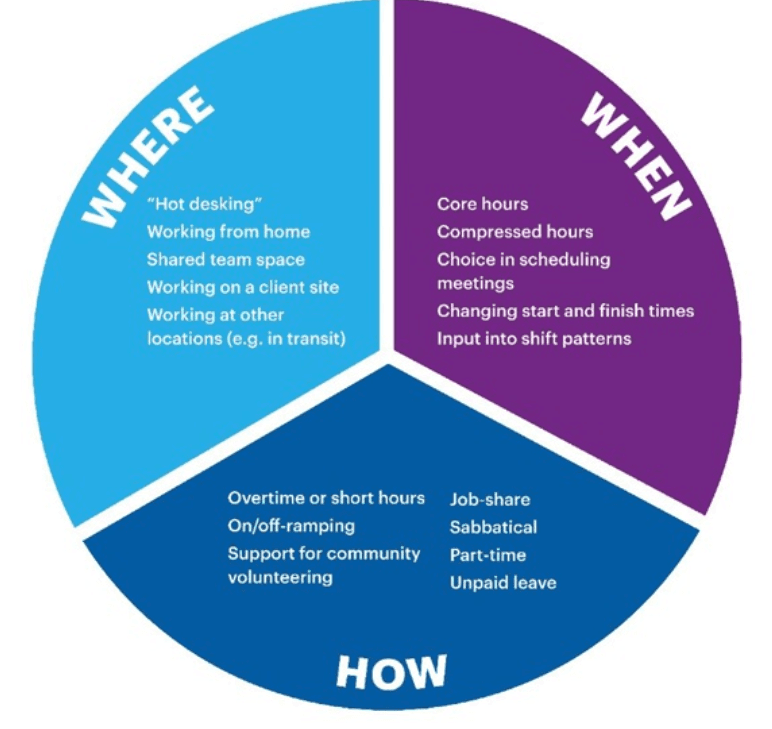
Agile working policies are much more versatile than flexible or hybrid working policies, as they give employees much more control over how they work in every aspect.
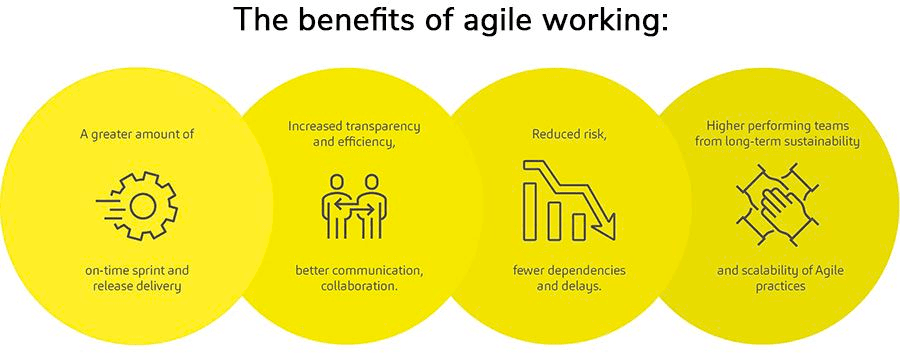
With at least 71% of U.S. companies adopting some form of agile working and 98% of those companies saying that agile adoption has helped them, it's clear that there are significant benefits to be gained from implementing an agile working policy. Here are some of the most notable ones.
One of the most common benefits of agile working is increased productivity. Research by BPS World revealed that 67% of agile businesses have witnessed an increase in employee productivity since adopting agile policies.
Naturally, when you give employees more control over their work, they'll be more engaged and motivated to do a good job because they're working on their own terms.
They'll also feel more trusted by their employer, which can lead to them feeling more loyalty towards the company.
Another big benefit of agile working is improved employee wellbeing. When employees have more control over when and where they work, they can better manage their work-life balance, which can lead to reduced stress levels and a more positive outlook.
In today's competitive job market, it's more important than ever for companies to offer flexible working arrangements if they want to attract and retain the best talent.
According to an EY survey, more than half of global employees would leave their current job if it didn't offer flexible working, especially post-pandemic.
So, if you want to attract and retain top talent, implementing an agile working policy is a great way to do it.
Traditional, inflexible working arrangements often stifle innovation and creativity, as employees feel like they can't take risks or think outside the box. However, when you adopt an agile way of working, you're encouraging your employees to be more innovative and creative in their approach, which can lead to better results for your business.
You never know where the next big idea will come from, so it's important to create an environment that fosters creativity and innovation.
Finally, agile workplace designs are very different from traditional office layouts, as they're much more flexible and adaptable. This means that you can make better use of your office space, which can reduce costs.
Companies usually pair that with desk booking software, so that employees can still find and reserve the space they need on the days they do come in.
For instance, you might decide to downsize your office space if you know that a large proportion of your employees will be working from home most of the time. Or, you might choose to eliminate private offices in favor of open-plan workstations that can be reconfigured as needed.
Plus, when you use space more efficiently, it's easier to accommodate new employees or downsize if needed, adding to the cost-saving benefits of agile working.
Agile work stems from the notion that when employees feel trusted and have more control over how they work, they'll be more productive, creative, and engaged. By granting them the convenience and comfort of working on their own terms, you're encouraging them to do their best work.
You'll reap these benefits even more if your company relies on collaboration between employees within and across departments. So, if you're looking to take your business to the next level, implementing agile working policies is a great place to start.
Find out how Tribeloo can help your company embrace agile ways of working today – don't miss out on the benefits of this transformational way of working!
Tribeloo makes it easy to bring employees back together and optimize your hybrid workplace through an easy-to-use hot desk booking software.

