

Hot desking is getting all the hype these days as businesses try to find ways to reduce expenses and promote collaboration in their hybrid workplace.
Simply, hot-desking (also known as flex desking or desk sharing) is when employees don't have assigned desks and instead float from desk to desk within the office on a first-come, first-serve basis. In other words, there are no assigned "cubes" or "offices" in a traditional sense.
It's no wonder hot desking has become increasingly popular since there are a lot of potential benefits to this type of arrangement. But before you make the switch, it’s important to weigh up all the pros and cons to see if hot desking is right for your business.

Here's a look at hot desking advantages and disadvantages.
Flex desking can bring many benefits to the table for your business. Here are the most notable 5.
One of the main reasons businesses love hot desking or desk sharing is because it can help lower your overhead costs. For example, if you have a large office space, you can downsize to a smaller one since you won't need as many desks. This can lead to big savings on your rental costs.
Along with lower overhead costs, hot desking can also help you make better use of your office space. Clutter is a big productivity killer, so getting rid of unused desks can free up a lot of space. This extra space can be used for more productive purposes, such as meeting rooms or breakout areas.
Another big benefit of desk sharing is that it can lead to increased collaboration among employees. When employees are floating around the office, they're more likely to bump into each other and strike up conversations. This can lead to a better exchange of ideas and a more collaborative environment.
In traditional offices, there can be a lot of hierarchy and politics at play. Even offices have their version of the "pecking order." But with hot desking, hierarchies are flattened since everyone is on an equal footing, and anyone can sit anywhere. This can lead to a more level playing field and a more democratic workplace overall.
Lastly, hot desking can accommodate different working styles. In traditional offices, employees are often pigeonholed into one way of working.
But with hot desking, employees can choose how they want to work. If they want to sit at a desk, they can. If they want to stand up, they can. If they want to work in a quiet area, they can. This flexibility can lead to increased productivity and satisfaction.
As much as hot desking has its advantages, there are also some potential disadvantages to consider. Here are the 5 main ones.
One of the biggest complaints about hot desking is that it can lead to a loss of identity for employees. Having your own desk is a physical representation of who you are and what you do. But when you don't, it can be harder to feel like you're part of the company.
Sitting around in a sea of different employees each day can also make it harder to build relationships and feel like part of a team. Accordingly, hot desking can lead to a feeling of isolation for some employees.
Another potential downside of hot desking is that it can disrupt your workflow. If you're used to having your own desk and everything you need within arms reach, it can be frustrating to search for a place to sit each day and hunt down all your supplies. This can lead to a lot of wasted time and lost productivity.
Another complaint about hot desking is that it can lead to less employee storage space. When everyone is sharing desks, there's less room to store personal belongings and work supplies. This can make staying organized difficult and lead to a cluttered work environment.
In the era of COVID-19, hygiene is more important than ever. But when desks (and equipment) are shared, it can be difficult to keep them clean. This can lead to the spread of illness and decreased workplace hygiene.
Accordingly, hot desking requires a higher level of cleanliness and sanitization to maintain a safe and healthy environment.
While hot desking flattens hierarchies, it can also lead to a loss of structure in the workplace. Some employees prefer a more traditional office setting with a clear hierarchy and defined roles.
Without these things, some employees may feel lost or confused about their place in the company since there's no physical representation of it.
Almost. Desk sharing is the general term for any setup where several employees use the same desk, and hot desking is the most common form of it, the one where desks cannot be reserved. Every hot desking office is desk sharing, but not every desk sharing office is hot desking.
The distinction matters when you are choosing a model, because desk sharing covers arrangements that behave very differently day to day.
Desk sharing is about who sits where; a flex office is about what the office is made of. You can run desk sharing in a conventional room full of identical desks, but a flex office deliberately offers several kinds of workspace and expects people to move between them during the day.
In practice most flex offices use desk sharing, because fixed seats would defeat the point, though the reverse is not true: plenty of companies share desks without redesigning the floor. If the redesign side is what interests you, activity-based working is the model that formalizes it.
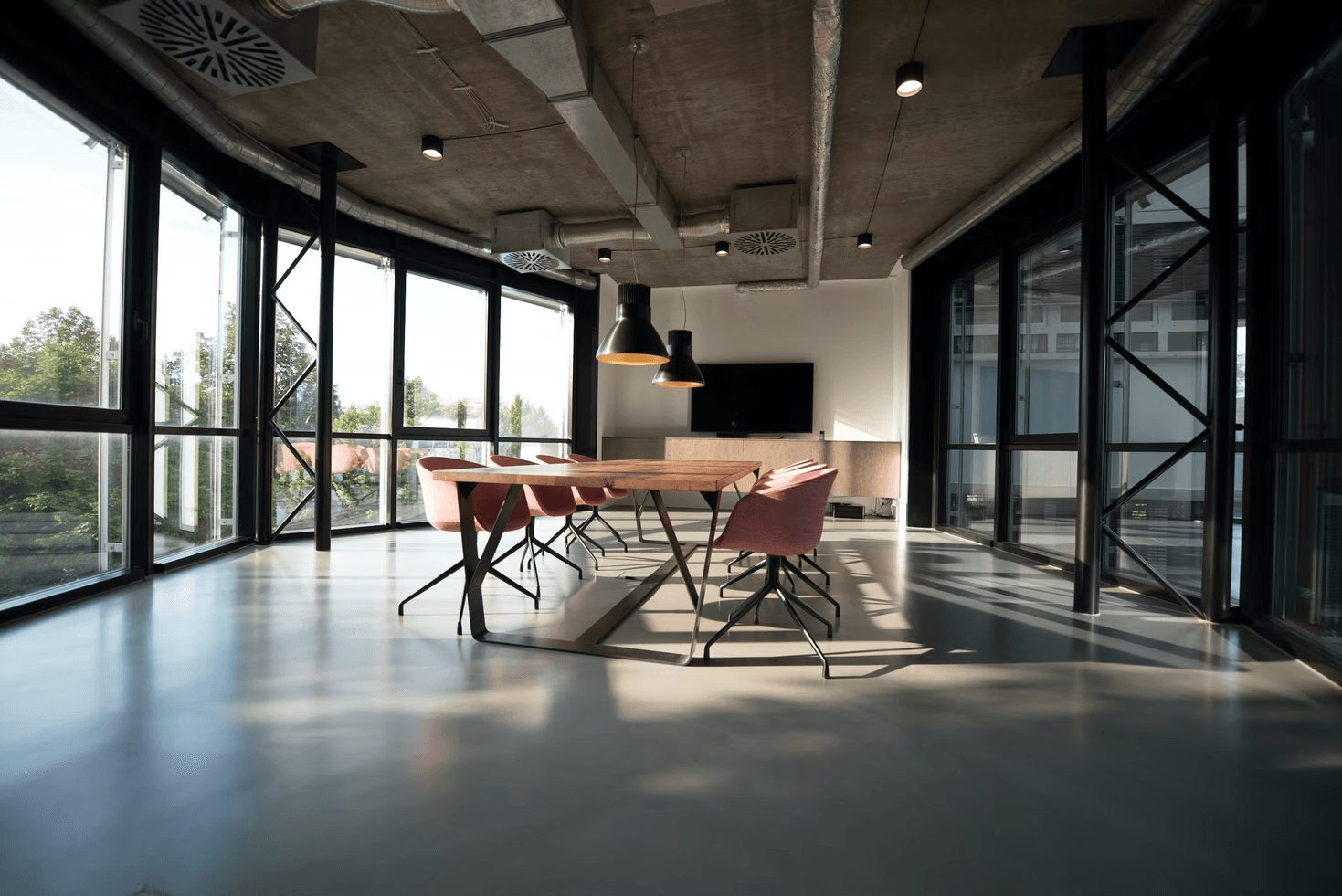
If pure hot desking is not right for your company, the usual alternative is office desk hoteling: the same unassigned desks, but bookable in advance. Employees reserve a spot with desk booking software, which removes the two biggest hot desking complaints, the daily hunt for a seat and the loss of a fixed base.
Before you decide either way, it is worth surveying your employees to see how they feel about sharing desks at all. Office hoteling pros and cons covers the reserved model in full, including how it compares with hot desking.
The debate over shared and assigned desks will likely continue for some time.
If you're considering hot desking, make sure to survey your employees first to see how they feel about it. If you find it not the right fit, office desk hoteling may be a better option. This way, your employees can enjoy the flexibility of hot desking without sacrificing their productivity or workflow.
The ideal solution might be a combination of hot desking (desks can't be booked in advance), desk hoteling (desks can be booked in advance), and even dedicated/assigned desks (for people that need to be in the office almost all the time).
By giving employees the choice, you can create an agile workspace that's tailored to their individual needs and preferences.
At Tribeloo, our desk-booking solution helps companies of all sizes manage their office management needs. Request a demo today to see how we can help you create a better workplace!
Tribeloo makes it easy to bring employees back together and optimize your hybrid workplace through an easy-to-use hot desk booking software.

